Selat Navigating
Maritime Excellence
Selat Navigating
Maritime Excellence
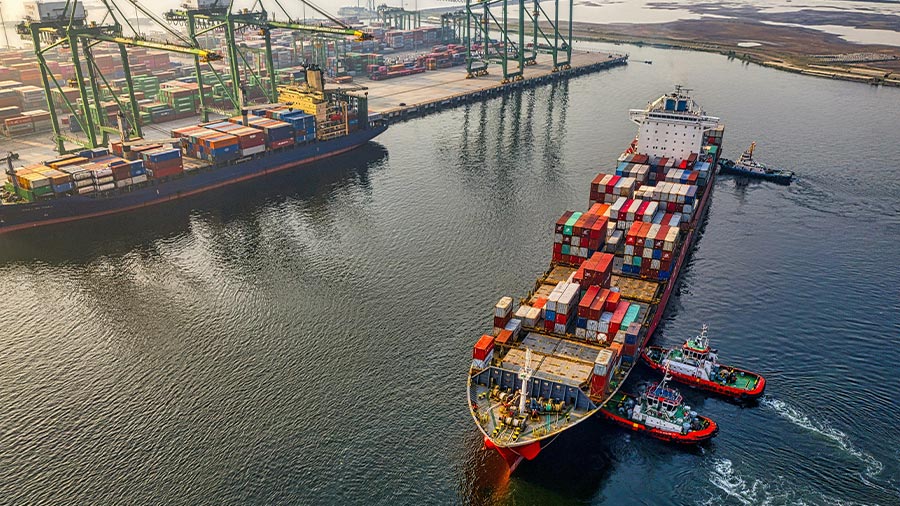
The Strait of Malacca has been at the vanguard of the revolution in
global shipping brought about by containerisation. The foundation of
global trade is now container ships, which transport standardised
containers that are simple to move between trucks, trains, and
ships. Because of its advantageous location, the Strait of Malacca
is now a vital container shipping route. It is impossible to
overestimate the importance of the Strait of Malacca for
international container transportation. Over 30% of global trade,
including a sizable amount of trade between Asia and Europe, is
thought to cross the strait.
The strait's capacity to handle big container ships and its
closeness to important Asian ports have made it an essential link in
international supply chains despite its inherent constraints.
Over 94,000 ships pass through the Strait of Malacca annually on
average, making it one of the busiest shipping lanes in the world.
An estimated 15.2 million barrels of oil are transported across the
strait's waters every day (in 2013), making it one of the busiest
shipping channels in the world.

Being a vital strategic waterway, it directly affects fuel
consumption, shipping costs, and the prompt transportation of products
across continents, making it an essential part of the world's energy
security. Disruptions to this path, whether brought on by political
unrest, accidents, or piracy, have the potential to significantly
raise global oil prices and energy expenses.
Beyond the energy industry, the Strait of Malacca is significant
because it facilitates the flow of different commercial commodities
and resources between key Asian economies including China, Japan,
Thailand, South Korea, and India. The stability and expansion of
regional economies and international trade networks depend on the
steady flow of large trade volumes across the strait.
Applying the lessons learnt from the previous year to possible
disruptions in the future draws attention to vulnerable chokepoints
like the Strait of Malacca. In addition to being a vital route for
the region, the Strait is becoming more and more significant to
global supply chains as global manufacturing centres move from China
to other Asian countries including Vietnam, Malaysia, and South
Korea. Supply chain management becomes more complicated as a result
of this diversification, despite the fact that it attempts to reduce
risks related to geopolitical conflicts and economic
dependencies.
In this situation, the dependence on the Strait of Malacca becomes
even more crucial. Although China's supply chain infrastructure is
well-established, new East Asian partners might not be as advanced.
This discrepancy may result in unanticipated delays and expenses as
well as logistical inefficiencies. Any disruption in this tiny
waterway might have serious repercussions for both Chinese
manufacturing and the entire area, as these new manufacturing hubs
primarily depend on the Strait for the transportation of
commodities.